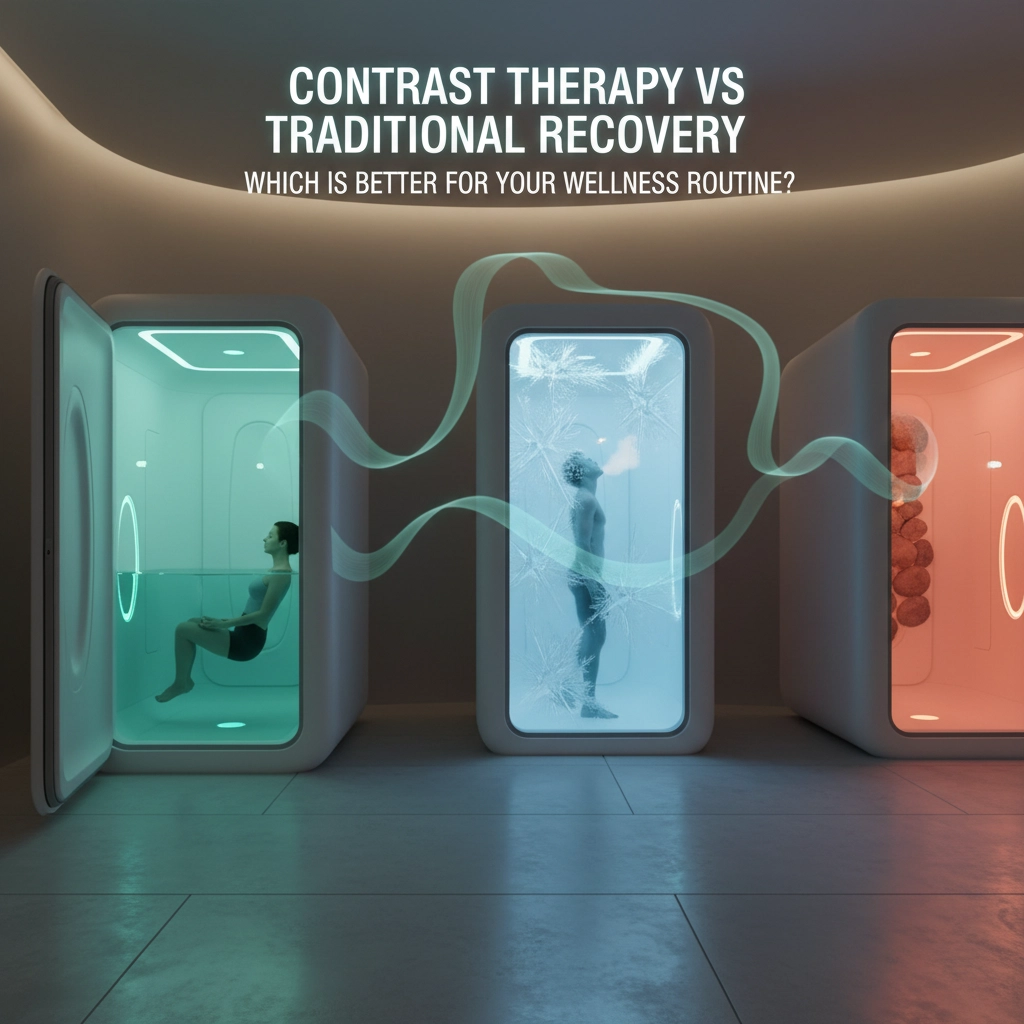
Contrast Therapy vs Traditional Recovery: Which Is Better For Your Wellness Routine?
Let's be honest ā€“ you've probably tried every recovery trick in the book. Ice baths that made you question your life choices, passive rest that felt more like giving up, and maybe even some questionable Pinterest remedies that didn't work. But here's the thing: the wellness world has been buzzing about contrast therapy, and for good reason.
If you're tired of recovery methods that leave you wondering "did that actually do anything?", it's time we had a real talk about what actually works. Spoiler alert: there's now solid science behind why some methods crush it while others just… don't.
What We're Actually Talking About Here
Contrast therapy isn't just wellness industry jargon ā€“ it's a scientifically-backed method that involves alternating between hot and cold water immersion. Think hot tub to cold plunge and back again, creating a cycle that makes your blood vessels expand and contract like they're doing cardio.
Traditional recovery methods are pretty much what you'd expect: passive rest (aka doing absolutely nothing), ice baths, and other single-temperature approaches that have been around forever. They're not wrong, but they're definitely not optimized.

Contrast Therapy: Why It's Actually Worth the Hype
Here's where things get interesting. Research shows that contrast therapy can reduce delayed onset muscle soreness (DOMS) by up to 50% compared to just sitting on your couch hoping for the best. That's not a small improvement ā€“ that's game-changing.
The Science Part (Don't Worry, We'll Keep It Simple)
When you alternate between hot and cold, your blood vessels play this elaborate dance of expanding and contracting. The hot water dilates your vessels, flooding your muscles with fresh oxygen and nutrients. The cold water constricts them, pushing out metabolic waste and reducing inflammation. It's like giving your circulatory system a personal trainer.
But here's the kicker ā€“ it's not just physical. Contrast therapy triggers the release of endorphins and norepinephrine, which basically means you get a natural mood boost while your muscles recover. It's wellness multitasking at its finest.
The Real Benefits:
- Significantly better DOMS reduction than passive recovery
- Improved circulation and lymphatic drainage
- Mental health benefits through hormone release
- Customizable intensity based on your tolerance
- Actually feels like you're doing something productive
The Not-So-Great Parts:
- More expensive than doing nothing (shocking, we know)
- Requires either a studio membership or a decent home setup
- No universal "perfect" protocol ā€“ you might need to experiment
- Takes actual time and commitment
Traditional Recovery: The Old Reliable (Sort Of)
Let's give credit where it's due ā€“ traditional methods aren't useless. They're just… limited. Passive rest works because your body naturally heals itself over time. Ice baths work because cold therapy reduces inflammation. But neither is particularly optimized for maximum recovery.

Ice Baths: The Cold Hard Truth
Ice baths have their place, especially if you're dealing with acute inflammation or you're on a tight budget. They're straightforward: get cold, reduce inflammation, done. But compared to contrast therapy, they're missing half the equation ā€“ the circulation boost that comes from heat exposure.
Passive Rest: When Doing Nothing Is Actually Something
Sometimes passive rest is exactly what you need, especially if you're managing an injury or just need baseline recovery between light workouts. It's free, it's easy, and it doesn't require any equipment or planning.
Why Traditional Methods Fall Short:
- Passive rest is significantly less effective for active recovery
- Ice baths alone don't provide the circulation benefits of alternating temperatures
- Limited mental health benefits compared to contrast therapy
- Can be uncomfortable without the reward of superior results
Let's Compare Apples to Apples
| What We're Looking At | Contrast Therapy | Ice Baths | Passive Rest |
|---|---|---|---|
| Muscle Soreness Reduction | Up to 50% better than rest | Better than rest, similar to contrast | Your baseline (lowest) |
| Inflammation Control | Excellent via vascular pumping | Direct cold-induced reduction | Minimal active control |
| Mental Health Boost | Significant hormone release | Some norepinephrine | Pretty much nothing |
| Your Wallet | Moderate to high cost | Low cost | Free |
| Ease of Access | Needs setup or studio | Accessible but brutal | Available 24/7 |
| Time Investment | 15-30 minutes | 10-15 minutes | However long you want |
| Comfort Level | Challenging but doable | Can be torture | Maximum comfort |
When to Choose What (The Real Talk Section)
Go with Contrast Therapy if:
- You're serious about optimizing recovery and willing to invest
- You want the most comprehensive physical and mental benefits
- You're training hard and need maximum DOMS reduction
- You have access to Float District's contrast therapy setup or can create one at home
- You don't mind a learning curve for optimal results
Stick with Ice Baths if:
- You're dealing with specific acute inflammation
- Budget is your main concern
- You prefer simple, straightforward protocols
- You're mainly focused on post-workout inflammation management
- You're okay with missing out on some potential benefits
Choose Passive Rest when:
- You're doing light maintenance between moderate workouts
- Time and resources are extremely limited
- You're managing injuries where immersion isn't appropriate
- You just need baseline recovery without active intervention

The Bottom Line (Finally)
Here's what the research actually tells us: contrast therapy consistently outperforms passive recovery for athletic performance and wellness, particularly for reducing muscle soreness and improving how you feel afterward. When compared directly to ice baths, both show similar physical benefits, but contrast therapy has the edge with additional mental health advantages.
The Practical Reality Check:
If you can access contrast therapy regularly, the evidence suggests it's worth it. The benefits are measurable, not just wellness industry marketing fluff. However, if that's not realistic for your lifestyle or budget, an ice bath still provides meaningful benefits over doing nothing.
But here's the thing that really matters ā€“ any active recovery method beats passive rest. The biggest jump in benefits happens when you move from doing nothing to doing something. Whether that something is contrast therapy or ice baths depends on your specific situation.
Making It Work for Your Life
The "best" recovery method is the one you'll actually use consistently. If contrast therapy feels too complicated or expensive, start with what's accessible. If ice baths make you miserable, they won't help in the long run. If passive rest is all you can manage right now, that's better than beating yourself up about not doing more.
Recovery isn't just about the method ā€“ it's about consistency, proper nutrition, adequate sleep, and managing stress. The most sophisticated recovery protocol in the world won't save you from poor lifestyle habits.
Ready to Level Up Your Recovery Game?
If you're curious about experiencing professional contrast therapy, Float District offers expertly designed contrast therapy sessions that take the guesswork out of protocols and temperatures. Sometimes the best way to figure out what works for you is to try it under optimal conditions first.
The wellness industry loves to overcomplicate things, but recovery doesn't have to be rocket science. Choose the method that fits your lifestyle, commit to consistency, and pay attention to how your body responds. Your muscles (and your mood) will thank you for it.
